

Q Switch Laser: Uses, Benefits, Disadvantages & Treatment
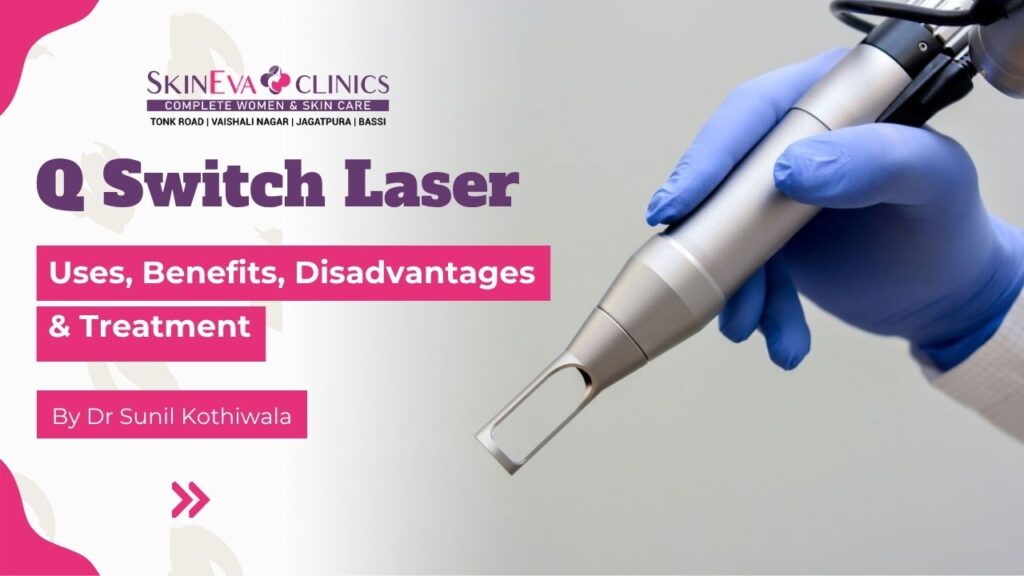
A Q Switch laser is a non-invasive dermatology laser that delivers ultra-short, high-energy pulses of light to break down excess melanin (skin pigment) and tattoo ink. The body then clears these tiny fragments naturally. It is used for pigmentation, tanning, sun spots, freckles, birthmarks and tattoo removal, usually over several sessions.
Stubborn dark spots, uneven skin tone and unwanted tattoos are among the most common concerns we see at our Jaipur clinic. Creams often help only partly, which is why many patients ask about the Q Switch laser. It is one of the most widely used lasers in dermatology, but it works best when matched to the right skin type, the right condition and the right settings.
This guide explains how it works, what it treats, its benefits and disadvantages, and what the treatment looks like.
How Does a Q Switch Laser Work?
“Q-switching” is a technique that releases laser energy in extremely short pulses, lasting only nanoseconds (billionths of a second). The Q Switch Nd:YAG laser uses a neodymium-doped yttrium aluminium garnet crystal to produce this light.
When the pulse hits the skin, the pigment or ink absorbs the energy and shatters into microscopic particles. The surrounding skin is largely spared, because the pulse is too short to spread much heat. During the following days to weeks, the body’s immune system gradually clears these particles, helping the skin look smoother, clearer and more even.
The laser usually works at two wavelengths:
- 1064 nm: Reaches deeper skin layers and is generally preferred for deeper pigment and darker skin tones.
- 532 nm: Targets superficial brown pigment such as freckles and sun spots, and some tattoo colours.
Q Switch Laser Uses
A Q Switch laser can treat a range of pigment-related concerns:
- Pigmentation and dark spots: Sun spots, age spots (lentigines), freckles and tanning.
- Post-acne marks: The brown or dark marks left after pimples (post-inflammatory hyperpigmentation).
- Melasma: May be considered carefully, usually within a combination treatment approach instead of being used alone.
- Tattoo removal: The standard laser approach for fading or removing tattoo ink.
- Birthmarks and pigmented lesions: Café-au-lait macules and Nevus of Ota, after proper dermatological assessment.
- Laser toning: Low-energy sessions that improve overall skin tone and brightness.
- Skin rejuvenation: Mild improvement in dullness, texture and pore appearance, with some stimulation of collagen.
Important limits: Q Switch is not a resurfacing laser for deep, pitted acne scars. Those are better treated with fractional lasers, microneedling or peels. Any suspicious or changing mole should be examined by a dermatologist before any laser is used.
Q Switch Laser Benefits
- Targeted action: It acts on pigment and ink while causing minimal damage to surrounding tissue.
- Non-invasive: No cuts, needles or stitches.
- Short sessions: A session usually takes 15 to 40 minutes, depending on the area.
- Minimal downtime: Most people return to routine activities straight away, with mild redness that settles quickly.
- Works where creams struggle: It can help stubborn pigmentation that has not responded to topical treatment alone.
- Versatile: One technology can address pigmentation, tanning, birthmarks and tattoos.
- Suitable for Indian skin when done correctly: With the right wavelength and conservative settings, it can be used on a wide range of skin tones. This depends heavily on the dermatologist’s experience.
- Long-lasting when maintained: Results can last well when you use daily sunscreen and follow the aftercare plan. Pigmentation can return if the skin is not protected from the sun.
Q Switch Laser Disadvantages and Side Effects
Q Switch laser is generally safe in experienced hands, but it is not risk-free.
Common and temporary:
- Redness, warmth and mild swelling for a few hours to a couple of days
- Temporary greyish or white frosting of the treated spot
- Mild tingling, itching or sensitivity
- Spots looking darker for a few days before they fade
Less common:
- Post-inflammatory hyperpigmentation: Paradoxically, the skin may darken, especially if the energy is too high or sun protection is poor.
- Hypopigmentation: Lightening of the treated area, which is rare but can occasionally be long-lasting.
- Blisters, crusting or scabbing: More likely with high settings or poor aftercare.
- Scarring or infection: Rare, and mostly linked to improper settings or wound care.
Other limitations:
- Multiple sessions are needed. Many conditions need several sessions, often spaced 4 to 8 weeks apart. Tattoos may need more.
- Tattoo colours vary. Green, yellow and some light colours can be harder to clear, and complete removal is not guaranteed.
- Melasma can relapse. It is a chronic condition, so laser alone rarely keeps it away. Aggressive settings can even worsen it.
- Results vary with your skin type, the depth of the pigment, your hormones and your sun exposure.
Q Switch Laser Treatment: Step by Step
- Consultation: Your dermatologist examines your skin type, the nature and depth of the pigmentation, your medical history, medications and any previous treatments. This step decides whether Q Switch is right for you at all.
- Test patch (when needed): For darker skin tones or uncertain lesions, a small test area may be treated first to check how your skin responds.
- Preparation: The skin is cleansed, and protective eyewear is provided. A numbing cream may be applied for sensitive areas.
- Laser session: The laser is passed over the target area in quick pulses. Most people describe it as a light rubber-band snap. A session typically lasts 15 to 40 minutes.
- Immediate aftercare: The skin may look pink or briefly frosted. Cooling and a soothing ointment are applied, and sun protection advice is given.
- Healing and follow-up: Pigment fades gradually over days to weeks. Sessions are repeated at intervals suited to your skin, and your dermatologist tracks progress.
Aftercare essentials
- Use a broad-spectrum sunscreen of SPF 30 or higher every day, and reapply it. (See our guide on what SPF means.)
- Avoid direct sun, tanning, scrubbing and harsh actives until your doctor says it is safe.
- Do not pick at scabs or crusts.
- Follow any prescribed creams exactly.
Conclusion
The Q Switch laser is a well-established, non-invasive option for pigmentation, tanning, sun spots, birthmarks and tattoo removal. Its main strengths are precision and minimal downtime. Its main risks, such as pigment changes and incomplete clearance, are best managed by choosing an experienced dermatologist, using the right settings for your skin tone, and protecting your skin from the sun afterwards.
Frequently Asked Questions
What is a Q Switch laser used for?
It is used to treat pigmentation, tanning, sun spots, freckles, post-acne marks, birthmarks, melasma (as part of a combined plan) and tattoos.
Is Q Switch laser treatment safe?
Yes, it is generally safe when performed by a qualified dermatologist using appropriate settings suited to your skin type. Temporary redness and sensitivity are common, and risks rise with poor technique or neglected aftercare.
Is Q Switch laser treatment painful?
Most people notice a mild snapping or tingling sensation during treatment. A numbing cream can help with sensitive areas.
How many sessions of Q Switch laser are needed?
It depends on the condition. Superficial spots may improve in a few sessions, while melasma and tattoos often need more, typically spaced 4 to 8 weeks apart.
How long does it take to see results?
Some lightening may appear within one to two weeks of a session, but the full effect builds up over several sessions as the body clears the pigment.
Can Q Switch laser remove hyperpigmentation and dark spots?
It can significantly lighten many types of hyperpigmentation, especially sun spots, freckles and post-acne marks. The results vary depending on the depth and underlying cause of the pigmentation.
Does Q Switch laser work for melasma?
It can help in selected cases, but melasma is complex and can worsen with aggressive treatment. It is usually managed with gentle laser toning, topical treatment and strict sun protection.
Does Q Switch laser whiten skin?
No. It removes excess pigment in targeted areas and improves tone and brightness, but it does not change your natural skin colour.
Can Q Switch laser cause pigmentation?
Rarely, yes. Incorrect settings or poor sun protection can lead to darkening, which is why an experienced dermatologist matters.
Can Q Switch laser be done on Indian skin?
Yes, with careful wavelength selection, conservative settings and sometimes a test patch.
What is the difference between Q Switch laser and IPL?
Q Switch uses a single-wavelength laser to target pigment and ink precisely, while IPL uses broad-spectrum light and is more often used for redness and general photo-damage. Your dermatologist will advise which suits your concern.
Leave a Comment