


Alma Q-Switched Nd:YAG Laser: How It Works, What It Treats & What to Expect
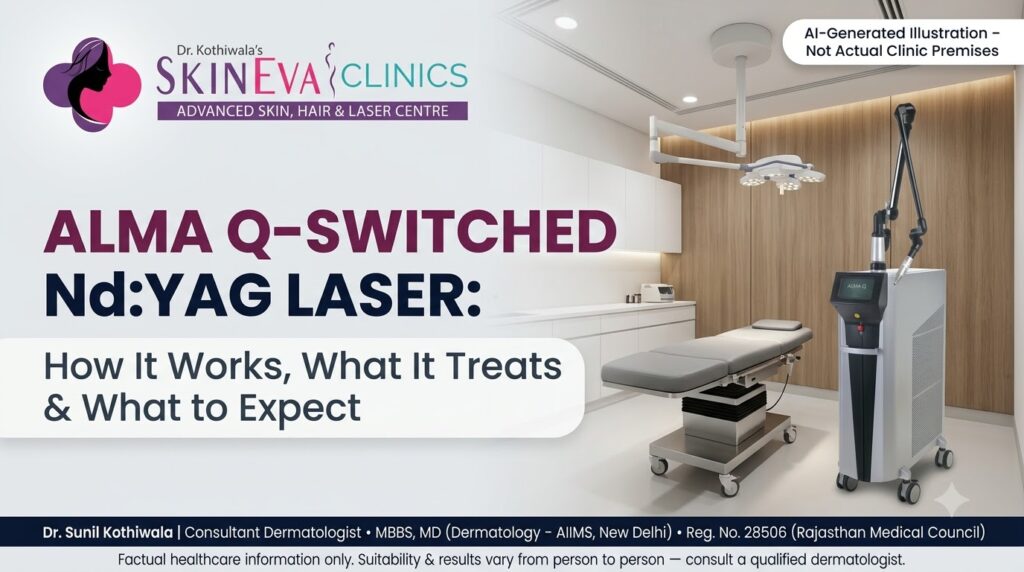
Alma Q is a Q-switched Nd:YAG laser that delivers very short nanosecond pulses (about 7 nanoseconds) at 1064 nm and 532 nm wavelengths. It is used to treat pigmentation (freckles, sun spots, age spots, sun tan, post-inflammatory marks), tattoos, certain birthmarks and vascular concerns, and for skin rejuvenation and carbon laser peel. It is indicated for Fitzpatrick skin types I to VI. Most treatments need a course of sessions, downtime is usually minimal, and results vary by condition and person.
What Is a Q-Switched Nd:YAG Laser?
“Nd:YAG” stands for neodymium-doped yttrium aluminium garnet, the crystal that produces the laser light. “Q-switched” is a method of storing laser energy and releasing it in an extremely short, powerful burst, lasting only billionths of a second (nanoseconds).
Alma Q is a multi-mode platform from Alma Lasers. It offers up to 2,000 mJ of energy per pulse and a pulse width of about 7 nanoseconds. Alma also reports published clinical studies on its use for pigmented lesions, tattoo removal and skin rejuvenation.
How Does It Work?
The key idea is a photoacoustic effect, which works in three steps:
- The laser light is absorbed by the target, such as melanin in a dark spot or ink particles in a tattoo.
- Because the pulse is so short, the target absorbs energy faster than it can release heat. It is shattered into tiny fragments by a mechanical shock wave rather than burned.
- The body’s immune system, particularly macrophages, gradually removes these fragments over days to weeks.
The extremely short laser pulse limits heat transfer to the surrounding skin. This is why Q-switched lasers are considered precise and low in thermal damage.
The Two Main Wavelengths
| Wavelength | Targets | Common Uses |
| 1064 nm | Deeper pigment (dermal), dark ink | Melasma toning, deeper pigmentation, nevus of Ota, black and blue tattoos, carbon peel |
| 532 nm | Superficial pigment (epidermal), red and yellow tones | Freckles, sun spots, age spots, red/orange/yellow tattoo inks, superficial vascular concerns |
The 1064 nm wavelength has lower melanin absorption and goes deeper, so it is generally safer for medium to dark Indian skin tones. The 532 nm wavelength is absorbed strongly by superficial pigment and red colours, so it is chosen carefully.
Modes and Features of Alma Q
Alma Q is described as a multi-mode system:
- Q-switched mode: Nanosecond pulses to break up pigment and ink with minimal heat.
- Quasi-long pulse and long pulse modes: Gentler heating of the skin for toning, tightening effects and some vascular concerns.
- Fractional delivery: A pattern of tiny treatment points with adjustable depth, used for non-ablative skin remodelling, such as improving texture, pores and some scars, with faster recovery than ablative lasers.
Multiple handpieces allow the doctor to match the spot size and setting to the area being treated.
What Can Alma Q Treat?
1. Pigmentation
- Freckles
- Sun spots and age spots (solar lentigines)
- Sun tan and uneven skin tone
- Post-inflammatory hyperpigmentation (PIH) following acne breakouts or skin damage.
- Café-au-lait macules (response can vary)
- Nevus of Ota, a bluish-grey patch that responds well to Q-switched lasers
2. Melasma
Melasma is a complicated condition caused by a combination of hormonal influences, sunlight, and genetic factors. Q-switched 1064 nm laser, used at gentle settings over multiple sessions (often called laser toning), can help lighten it. However, melasma can recur, and aggressive settings can cause rebound darkening or uneven patches. It is best treated with a combined plan from a dermatologist, including sunscreen and medicines.
3. Tattoo Removal
The 1064 nm wavelength targets black and dark blue ink, and the 532 nm wavelength targets red, orange and yellow. Green, light blue and some coloured inks are harder to remove. Tattoo removal needs many sessions spaced weeks apart, and complete removal cannot be promised.
4. Carbon Laser Peel (Hollywood Peel)
A thin layer of carbon lotion is applied, and the laser breaks it down along with surface impurities and dead cells. It is used for oily skin, open pores, dull skin and mild texture issues, and it gives a quick glow with little downtime.
5. Skin Rejuvenation
With fractional and low-energy settings, Alma Q is used for fine lines, uneven texture, open pores and mild skin laxity. Results are gradual and mild to moderate, not equal to surgical or ablative resurfacing.
6. Vascular Concerns
The 532 nm wavelength and long-pulse modes can help with small facial vessels (telangiectasia), spider angiomas and diffuse redness. Large or deep veins, such as varicose veins, need other treatments.
Benefits of Alma Q Laser Treatment
- Precise: Nanosecond pulses focus on pigment or ink while limiting damage to nearby skin.
- Versatile: One platform can address pigmentation, tattoos, redness and skin quality.
- Suitable for all skin types (I–VI) when settings are chosen correctly.
- Little to no downtime: Most people return to normal routines right away.
- Non-invasive: No cuts, no anaesthesia, and no recovery period in most cases.
- Gradual improvement: Skin tone, clarity and texture improve over a course.
How Many Sessions Are Needed?
This depends on the concern:
| Concern | Typical Plan |
| Freckles, sun spots | 1 to 3 sessions |
| Sun tan, dullness, carbon peel | 1 session, repeated every few weeks for maintenance |
| Melasma and PIH (laser toning) | Series of 6 to 10 sessions, 1 to 2 weeks apart, with maintenance |
| Nevus of Ota | Several sessions, often 5 to 10 or more |
| Tattoo removal | Many sessions, usually 6 weeks or more apart |
| Skin rejuvenation | 3 to 6 sessions, 3 to 4 weeks apart |
These are approximate. Your dermatologist will give a plan after examining your skin.
What Happens During a Session?
- Assessment: The doctor examines your skin, confirms the diagnosis and checks your medical history. Skin cancer must be ruled out before treating any dark spot.
- Cleansing and eye protection: The skin is cleaned, and protective eyewear is given.
- Settings: Wavelength, energy and spot size are selected for your skin tone and condition.
- Laser pulses: You may feel a light snapping or tingling sensation, like small rubber-band flicks. Numbing cream is not needed for most pigmentation treatments but may be used for tattoos.
- Aftercare: A soothing product and sunscreen are applied.
Sessions last around 15 to 30 minutes for the face.
Downtime and Aftercare
Downtime is usually minimal.
- Mild redness or warmth settles within hours to 2 to 3 days.
- Pigmented spots may darken and flake off over 5 to 10 days. This is expected.
- Tattoo areas may blister, scab or swell slightly, and need careful care.
Aftercare tips:
- Use a broad-spectrum sunscreen daily and avoid direct sun.
- Do not pick or scrub scabs or flakes.
- Keep the skin moisturised.
- Avoid harsh products, waxing and hot treatments until the skin settles.
- Follow your dermatologist’s instructions for any medicines or creams.
Final Thoughts
The Alma Q Q-switched Nd:YAG laser is a versatile tool for pigmentation, tattoos, skin tone and texture. Its ultra-short pulses target pigment precisely while limiting heat damage, and its 1064 nm and 532 nm wavelengths allow treatment of different depths and colours. Good results depend on the right diagnosis, careful settings, a full course of sessions and strict sun protection. If you are considering laser pigmentation treatment in Jaipur, begin with a consultation with a qualified dermatologist.
Frequently Asked Questions
Is Alma Q safe for Indian skin?
It is indicated for skin types I to VI. The 1064 nm wavelength is commonly used on darker skin, with settings adjusted by a doctor.
Is the treatment painful?
Most people feel a mild snapping or tingling sensation. Tattoo removal can be more uncomfortable.
Is there any downtime?
Usually not. Mild redness may last a few hours to 2 to 3 days, and spots may flake off.
Can it cure melasma?
It can help lighten melasma, but melasma is a long-term condition and may return. A combined plan with sun protection and medicines works best.
Leave a Comment