


Food That Causes Acne: What to Eat and What to Avoid for Clear, Healthy Skin
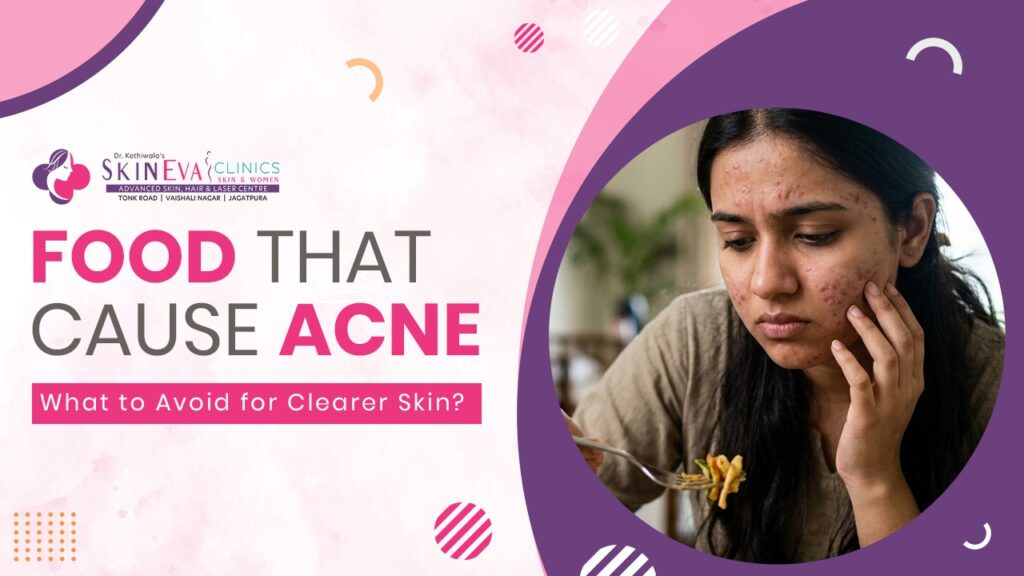
Acne is often believed to be caused only by poor skincare or hormonal changes, but diet plays an equally important role in determining skin health. What you eat daily has a direct impact on your hormones, oil production, inflammation levels, and even the bacteria that live on your skin. Certain foods can trigger hormonal imbalances, increase sebum (oil) production, raise inflammation, and clog pores—leading to pimples, frequent breakouts, and persistent acne flare-ups.
On the other hand, a balanced, nutrient-rich diet can help regulate hormones, reduce inflammation, support skin repair, and improve overall skin clarity. Understanding which foods worsen acne and which foods help prevent it can bring noticeable and long-term improvement in your skin. Let’s explore this in detail.
How Diet Affects Acne
Many acne-triggering foods cause a rise in insulin and androgen hormones in the body. Increased insulin levels trigger sebaceous glands to release more oil. This excess oil combines with dead skin cells, clogs pores, and encourages the growth of acne-causing bacteria.
Additionally, some foods also increase inflammation and disturb gut health, both of which are strongly connected to acne severity. Skincare works externally, but diet improves skin from within. Hormonal balance, gut health, inflammation control, and skin repair all depend heavily on what you eat.
Foods That Cause Acne (What NOT to Eat)
1. High-Glycemic Foods
High-glycemic foods lead to quick spikes in blood sugar and insulin, triggering increased oil production.
Avoid or limit:
- White bread, white rice, pasta
- Pastries and baked goods
- Sugary cereals
- Sodas and sweetened beverages
- Candy and desserts
Reducing these foods can significantly decrease acne flare-ups.
2. Dairy Products and Acne
Dairy products contain hormones and proteins that can increase oil production. Milk also raises levels of Insulin-like Growth Factor-1 (IGF-1), which worsens acne.
Limit or avoid:
- Milk (especially skim milk)
- Cheese
- Ice cream
- Sweetened yogurt
If you notice acne worsening after dairy consumption, consider plant-based alternatives such as almond milk, oat milk, or soy milk.
3. Processed and Packaged Foods
Processed foods usually contain preservatives, additives, unhealthy fats, and artificial ingredients that encourage inflammation.
Avoid:
- Packaged snacks
- Chips
- Ready-to-eat meals
- Foods high in trans fats
These foods can disrupt hormones and clog pores.
4. Fried and Fast Foods
Fast foods and deep-fried items are rich in unhealthy fats that increase inflammation and sebum production.
Avoid:
- Burgers and fries
- Fried snacks
- Junk foods high in saturated fats
These are major acne-triggering foods.
5. Chocolate and Sweet Treats
Dark chocolate in small amounts may be helpful due to antioxidants, but sugary chocolates and sweets can make acne worse.
Why they cause acne:
High sugar levels cause insulin spikes, leading to more oil production and acne breakouts.
6. Excessive Caffeine and Alcohol
Excessive caffeine and alcohol consumption can:
- Dry out the skin
- Disturb hormonal balance
- Impact liver detoxification
Moderation and proper hydration are essential to prevent acne flare-ups.
Foods That Help To Reduce Acne (What to Eat)
1. Low-Glycemic Foods
Low-glycemic foods slowly release sugar into the blood, preventing sharp insulin rises. High insulin can worsen hormonal acne by boosting oil production and inflammation.
Best low-glycemic foods include:
- Whole grains such as brown rice, oats, and quinoa
- Legumes like beans, lentils, and chickpeas
- Non-starchy vegetables such as spinach, kale, and broccoli
- Fruits like berries, apples, and pears
Why they help:
These foods keep insulin levels stable, reduce excess sebum production, and lower the frequency of acne breakouts.
2. Omega-3 Rich Foods
Omega-3 fatty acids are widely recognized for their strong anti-inflammatory benefits. Since acne is an inflammatory condition, including omega-3s in your diet can significantly improve acne-related redness and swelling.
Omega-3 rich foods include:
- Fatty fish such as salmon, mackerel, and sardines
- Flaxseeds and chia seeds
- Walnuts
Why they help:
Omega-3s help calm skin inflammation, regulate hormones, and reduce the severity of hormonal acne.
3. Antioxidant-Rich Fruits and Vegetables
Antioxidants defend skin cells against harm from free radicals and environmental stress. Vitamins A, C, and E are especially essential for healthy, acne-free skin.
Best antioxidant foods include:
- Vitamin A: carrots, sweet potatoes
- Vitamin C: citrus fruits, strawberries, kiwi
- Vitamin E: nuts and seeds
Why they help:
These nutrients support skin repair, improve collagen production, reduce inflammation, and promote a clearer complexion.
4. Probiotic Foods
The health of your gut directly affects the condition of your skin. An imbalanced gut can increase inflammation and hormonal disturbances, worsening acne.
Probiotic-rich foods include:
- Yogurt with live cultures
- Kefir
- Fermented foods like sauerkraut and kimchi
- Miso and tempeh
Why they help:
Probiotics improve digestion, balance gut bacteria, regulate hormones, and may help reduce acne severity over time.
5. Zinc-Rich Foods
Zinc plays an important role in skin healing, immunity, and oil control. Research shows acne-prone individuals often have low zinc levels.
Zinc-rich foods include:
- Pumpkin seeds
- Cashews
- Chickpeas
- Lean meats
Why they help:
Zinc helps control oil production, reduces inflammation, and supports faster healing of acne lesions.
Foods That Support Clear Skin
Avoiding acne-triggering foods alone is not enough. Your body also needs skin-nourishing nutrients to stay healthy.
Skin-supporting foods include:
- Leafy greens such as spinach and kale
- Fatty fish such as salmon and sardines
- Nuts and seeds like walnuts and chia seeds
- Fresh fruits including berries, oranges, and kiwi
- Whole grains
- ns and cereals
- Dry fruits
Conclusion
Acne is not just a surface-level skin problem—it is closely linked to your diet, hormones, gut health, and lifestyle choices. Foods that spike insulin, increase inflammation, and disrupt hormonal balance can worsen acne, while nutrient-rich, anti-inflammatory foods help heal and protect the skin. By avoiding high-glycemic foods, dairy, processed items, and fried foods—and focusing on whole grains, fruits, vegetables, omega-3 fatty acids, probiotics, and zinc—you can support clearer, healthier skin from within. Consistency is crucial. Even small dietary changes, when followed regularly, can lead to long-term improvement in acne and overall skin health.
Leave a Comment